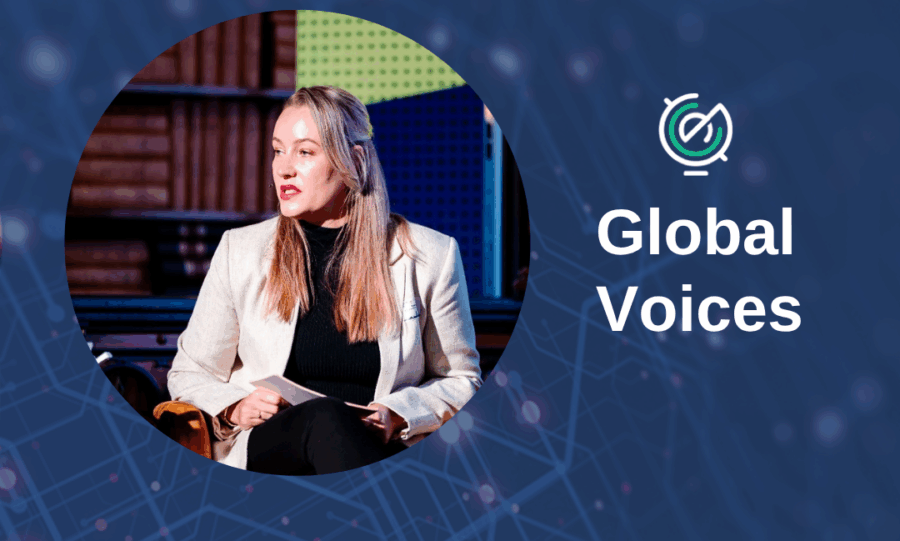
Ayleen Charlotte, international keynote speaker and advocate on fraud, resilience, and empowerment, is a leading voice against fraud and online scams. She was awarded GASA’s “Scam Fighter Person of the Year” in 2023, after she exposed her Tinder Swindler experience and how she lost €150K to romance fraud. Very active and engaged, she responded to our Global Voices interview sharing recommendations, details about what she is doing now, and why she thinks GCA plays “a crucial role by bridging the gap between technology, education, and policy, (…) and helping create global frameworks, share best practices, push for stronger regulations and help shape cultural change so that talking about scams becomes normalized.”
Your story was featured in the documentary “The Tinder Swindler,” and you’ve since gone on to become a leading voice against fraud and online scams. How has this experience changed your life?
The Tinder Swindler has changed my life completely. What started as a painful and negative experience has transformed into something meaningful and empowering. Through the documentary’s impact, I was able to reclaim my narrative and use it as a platform to raise awareness, advocate for victims, and drive real change. I founded S.A.F.E. by Ayleen Charlotte (Scam Awareness & Fraud Education), a global initiative dedicated to educating individuals and organizations on scams, prevention and victim support. Turning this trauma into a mission has given me a sense of purpose I never expected.
What are the biggest misconceptions about scam survivors and their scam and recovery journeys?
One of the biggest misconceptions is that scam survivors are naïve, careless, or greedy — but this couldn’t be further from the truth. Scammers are sophisticated manipulators who exploit trust, emotion, and human vulnerability. Another misconception is that recovery is quick once the scam ends. In reality, survivors often face a long journey of financial, emotional, and psychological recovery, often dealing with shame, social stigma, and self-blame. That’s why I work very hard to provide training to professionals — so they better understand the psychological impact and how to support survivors effectively.
According to Global Anti-Scam Alliance and Feedzai, scams cost over USD $1 trillion in 12 months globally. What’s driving this increase in online scams, and what advice would you give to other scam survivors going through similar experiences? Where can they turn to for help and recovery?
The explosion of scams is driven by a combination of advanced technology (AI, deepfakes, phishing tools), the speed of online transactions, and global criminal networks. Scammers don’t just steal money — they groom victims, gaslight them, and break down their instincts over time.
To survivors, I want to say clearly: this is not your fault, and you are not alone. Reach out for help — a dear friend, a relative, local support groups, specialized fraud units, financial ombudsmen, or survivor communities can guide you.
We launched CyberFlex in 2024, our cybersecurity tool for young adults aged 18-25, when we noticed a wave of data highlighting the susceptibility of this age group to cyber threats. Do you have any advice specifically for younger people to improve their online habits?
Absolutely! Younger people often underestimate the risks because they feel digitally native — but scammers are evolving just as fast. My advice:
- Be intentional with what you share online.
- Always verify unexpected messages, links, or investment offers, even if they appear to come from someone you know.
- Remember: if something feels too good to be true, it probably is {a scam}.
- And most importantly, if you fall victim, speak up. Silence only empowers the scammers.
What does digital security mean to you now? How do you think organizations like GCA and other nonprofits can contribute to a more secure digital future for all?
Digital security is no longer just a technical issue; it’s a human one. It’s about protecting people’s trust, emotions, and well-being online. Organizations like GCA, together with other nonprofits and advocacy initiatives, play a crucial role by bridging the gap between technology, education, and policy. They can create global frameworks, share best practices, and push for stronger regulations — but equally, they can help shape cultural change so that talking about scams becomes as normalized as talking about other forms of crime or harm.
From your experience, where do companies and relevant authorities go wrong in interacting with or protecting scam survivors? How is your new organization fighting to change this?
Too often, companies and authorities treat scam survivors solely as financial cases or fraud numbers — overlooking the deep emotional trauma involved. Many victims report feeling blamed, dismissed, or unsupported, which compounds their harm. With S.A.F.E. by Ayleen Charlotte, I train organizations to adopt victim-centered practices, provide empathetic communication, and create personalized policies that prioritize the survivor’s recovery, not just the financial investigation. We know that a poor first response can push victims into a downward spiral of isolation, depression, or even further financial risk. But the right help — empathetic, informed, and supportive — can make all the difference in starting to rebuild. I also work to empower survivors directly by giving speeches, lectures, and attending survivor gatherings, helping victims reclaim their voices and rebuild confidence. Together, we are creating a stronger support network to break the cycle of scams.