From state-backed telecom hacks to AI’s double-edged sword, GCA urges practical, community-driven defenses
New York, NY – December 10, 2025 – Global Cyber Alliance (GCA), an international nonprofit dedicated to improving Internet security, today released its review of 2025 cyber trends and its response strategies for 2026.
1. Persistent Telecom Hacks Exposed Infrastructure Fragility
Cyber threat group Salt Typhoon compromised major telecommunications providers, breached government wiretapping systems, and established persistent access across global networks. Instead of seeking to steal customer data, Salt Typhoon focused on controlling communications infrastructure that billions rely on every day.
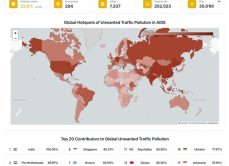
GCA’s report, “Salt Typhoon Across the Internet: What AIDE Honeypots Reveal About a Persistent State-Linked Campaign,” demonstrates Salt Typhoon’s operational characteristics through observable attack patterns spanning 2+ years and recommends defensive measures that provide protection against documented attack vectors.
Salt Typhoon, and other attacks like it, will expand in 2026. GCA will continue deepening collaboration with telecom operators, regulators, and technical partners, enabling defensive measures through its AIDE portal, and understanding that where we work together, measurable improvements follow.
2. AI Became a Force Multiplier
Organizations used AI to detect anomalies, triage alerts, and streamline incident response, while criminals used AI to scale phishing attempts, automatically probe systems, and craft targeted attacks.
GCA launched an AI resource page offering practical safety tips and explainers to non-experts to stay safe and secure in an AI-driven world.
In 2026, small businesses and nonprofits will be especially vulnerable, as they often lack the staff, time, and expertise to assess and manage risks. GCA will use AI to automate the full lifecycle of GCA’s training and resources to reach more people in more places than ever before.
3. The Cyber Skills Gap Deepened as AI Automates Routine Tasks
Organizations of all sizes are facing a cybersecurity workforce shortage. Meanwhile, many people either don’t know or simply ignore cybersecurity basics, leaving individuals and organizations exposed to phishing, fraud, and social-engineering attacks.
In addition to continuously improving our curated cybersecurity toolkits, GCA piloted an AI+Cyber curriculum that doesn’t just teach students about AI risks, but turns them into solutions builders.
In 2026, “vibe coding” will create additional bugs and security vulnerabilities. GCA will expand the AI+Cyber curriculum that equips the next generation of cyber leaders with practical skills and a security-first mindset.
4. Cybercriminals Capitalized on Crisis and Seasonal Giving
Consumers lost $12.5B to fraud in 2024. Major storms, humanitarian crises, and year-end generosity fueled a surge in fraudulent donation schemes again in 2025.
GCA updated guidance on preventing charity fraud and offers tips for shopping online safely, especially during the holidays when cybercrime rises by as much as 30%.
In 2026, these attacks will only get worse, as AI-based crime gets easier, cheaper, and better. GCA will continue to deliver practical guidance and simple, easy-to-follow tutorials that help people stay safer online.
5. Cybersecurity-focused Nonprofits Struggled in an Uncertain Funding Landscape
Hundreds of nonprofits maintain critical cybersecurity functions for the good of the Internet and all its users, but are often run with skeleton crews and razor-thin budgets. When these services aren’t available to build and protect technical standards, distribute open-source code, directly protect people, and enhance reliability, everyone suffers.
GCA worked to close that gap by coordinating the nonprofit cybersecurity ecosystem to reduce duplication and unlock joint fundraising opportunities. GCA, in collaboration with the Internet Society, announced the Common Good Cyber Fund and highlighted the real-world impact of cybersecurity nonprofits.
Funding challenges will persist in 2026. GCA will lead the Common Good Cyber Fund Ecosystem Committee to deepen international coordination and provide scalable support against digital harm, ensuring the organizations protecting the world’s most vulnerable communities have the tools, visibility, and support they need to keep people safe online.
“As we look to 2026, our focus is enabling everyday resilience,” said Brian Cute, Interim CEO of GCA. “If we give people simple, proven tools and pair them with infrastructure-level improvements and global collaboration, we can meaningfully bend the curve on cyber risk.”