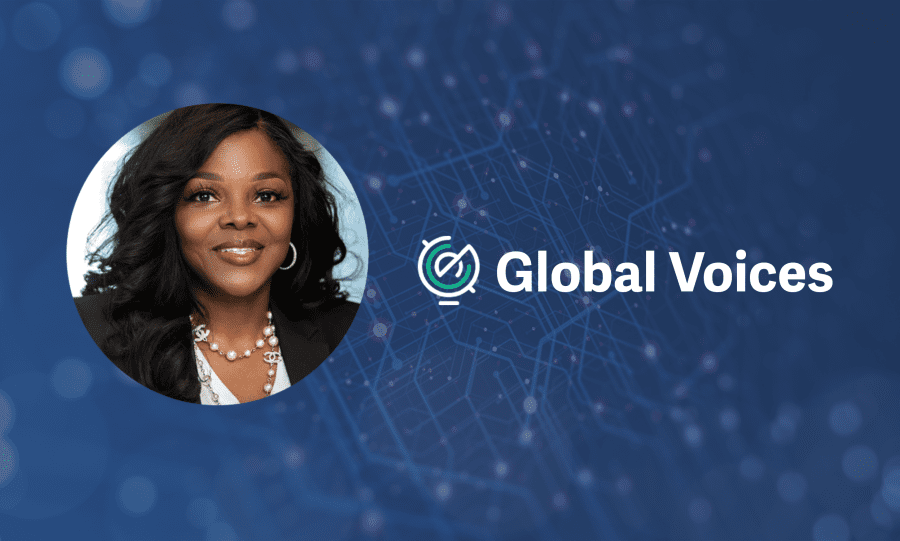
Alissa “Dr. Jay” Abdullah is the SVP & Deputy Chief Security Officer at Mastercard, and a former White House technology executive. She is a strong advocate for education to mitigate risk and close the cybersecurity talent gap. In her weekly 60-second podcasts, Dr. Jay provides cyber tips, tricks, and terms.
We celebrate Women’s History Month by interviewing her for our ‘Global Voices’ series, where we speak with leaders, experts, and practitioners to learn more about emerging trends, challenges, and opportunities in the cybersecurity landscape.
Today’s world is digital, but no matter what new technology or trend comes along we must remember how important basic cyber hygiene is. What are your top tips for staying safe online?
Staying safe online comes down to following the three “S’s.” First, always ‘stay suspicious’ of phishing—if something doesn’t feel right, don’t click on links or open attachments until you’ve verified the message. A quick way to do this is by searching for the organization online and calling them directly—avoid using the contact info in the message! Second, ‘stay protected’ by using unique passwords for each account and enabling multi-factor authentication wherever you can. Lastly, ‘stay current’ by keeping your software up-to-date.
Given your experience in high-level government roles and a top global financial organization, what keeps you up at night?
The rapid pace of technological change creates constant challenges, especially for small and midsize businesses (SMBs) trying to keep up. As cyber threats evolve, so do the tools and strategies needed to defend against them—but with limited resources, many SMBs struggle to stay ahead. At Mastercard, we understand these challenges and are committed to sharing insights and providing accessible tools to help businesses of all sizes build resilience. When we work together, we strengthen not only individual organizations but the entire digital ecosystem.
One of your many skills is your ability to express complicated concepts in simple terms. What is your recipe to get your messages across?
I like to keep it light and relatable for the audience, tailoring the message to what they know and what interests them. I also use analogies and examples – comparing tricky ideas to everyday experiences – to help make them click. Keeping things short and sweet is key, focusing on the core message and cutting out unnecessary jargon. And, of course, I always encourage questions and feedback—the more interactive, the better!
In such a complex world with so many channels of communication, how do you reach people in the most efficient and effective way?
To truly connect with people today, you need to get creative and mix things up. Understand what your audience cares about and engage them on the platforms they use most. Keep your message consistent and leverage a variety of communication channels – social media, email, and collaboration tools – as powerful ways to reach more people. Personalize your communication so it feels like a direct conversation, not just a generic blast. Keep it fresh, fun, and engaging, and you’ll build stronger connections along the way!
The GCA Cybersecurity Toolkits recently surpassed two million visits. Mastercard sponsors the Small Business Toolkit and is an essential partner of GCA. What are the benefits of such a strong alliance?
Safety and security are at the heart of everything we do. Every day, we’re dedicated to finding new and better ways to keep payments safe—especially for small businesses, which are the backbone of any economy. Through our partnership with the Global Cyber Alliance, we’re helping entrepreneurs and business owners better protect themselves. This allows them to stay focused on what they do best: running and growing their businesses.
Women hold around 25 percent of cybersecurity jobs globally, accounting for about one quarter of the overall workforce. As an example of a leader in your profession and from an outstanding multinational organization like Mastercard, what measures should be promoted to close this gap?
To close the gender gap in cybersecurity, mentorship and early engagement should be a top priority. It’s all about getting young women excited about the field, from elementary school all the way through college, and showing them just how many incredible opportunities cybersecurity has to offer.